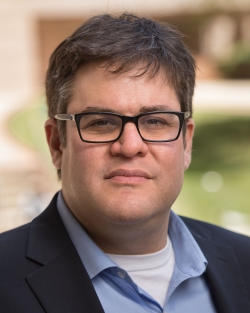
• Berk Ozler, World Bank

    CCPR Seminar Room 4240 Public Affairs Building, Los Angeles, CA, United States

    FP3.0: Increasing the uptake of Long-Acting Reversible Contraceptives (LARCs) among adolescent females and young women in Cameroon

    In sub-Saharan Africa, 25% of teenagers have started childbearing (ICF, 2015). While young women describe many of these births as planned and intentional, women under the age of 20 also have the greatest percentage of mistimed/unintended pregnancies compared to all other age groups. For example, in Cameroon, more than 30% of the births to this group were unwanted or wanted later (DHS 2011). Low age at first birth has a significant impact on the spacing of births and timing of future pregnancies. It may also reduce accumulation of human capital for both the mother and the child.

    Co-sponsored with the UCLA Luskin Senior Fellows Speaker Series 

  • V. Joseph Hotz, Duke University

    CCPR Seminar Room 4240 Public Affairs Building, Los Angeles, CA, United States

    "The Role of Parental Wealth & Income in Financing Children's College Attendance & Its Consequences"

    Abstract: This paper examines the influence of parental wealth and income on their children's college attendance and parents' financial support for it and whether the latter affects the subsequent levels of indebtedness of parents and their children. We use data from the PSID, especially data in the 2013 Rosters and Transfers Module on the incidence and amounts of parents' financial support for their children's college. To instrument for the potential endogeneity of parental housing wealth and income on these decisions, we use changes in parents' local housing and labor market conditions. We find that increases in both parents' housing wealth and income increase the likelihood of their children attending college through the effect of parents' financial support. This parental financing of college leads to parents carrying more debt, but their children having no greater student loan debt after graduation. We also find that parental financing of their child's college education significantly increases the probability that the child actually graduates from college.

  • Dennis Culhane, University of Pennsylvania

    CCPR Seminar Room 4240 Public Affairs Building, Los Angeles, CA, United States

    "The Promise of Integrated Data Systems for Social Science Research"

    Abstract: Integrated Data Systems (IDS) linking administrative, public agency data hold great promise for rapid and low-cost implementation and evaluation of homeless initiatives. Culhane will review the legal, ethical, scientific and economic challenges of interagency data sharing, as well as systematic efforts including policy reform and inter-agency collaboration to overcome these challenges. Finally, he will review important new IDS initiatives in LA County and California.

  • Sarah Baird, George Washington University

    CCPR Seminar Room 4240 Public Affairs Building, Los Angeles, CA, United States

    "When the Money Runs Out: Do Cash Transfers Have Sustained Effects on Human Capital Accumulation?"

    Abstract: The five-year evaluation of a cash transfer program targeted to young women points to both the promise and limitations of cash transfers for persistent welfare gains. Conditional cash transfers produced sustained improvements in education and fertility for initially out-of-school females, but caused no gains in other outcomes. Significant declines in HIV prevalence, pregnancy and early marriage observed during the program among recipients of unconditional cash transfers (UCTs) evaporated quickly after the cessation of support. However, children born to UCT beneficiaries during the program had significantly higher height-for-age z-scores at follow-up pointing to the potential importance of cash during critical periods.

  • Susan Cassels, UC Santa Barbara

    CCPR Seminar Room 4240 Public Affairs Building, Los Angeles, CA, United States

    "Self-selection or enabling environments: What predicts the association between short-term mobility and sexual behavior?"

    Abstract: Short-term mobility is often associated with increased risk behavior. For example, mobile individuals often have higher rates of sexual risk behavior compared to non-mobile individuals, but the reasons why are not clear. Using monthly retrospective panel data from Ghana, we test whether short-term mobility is associated with differences in total and unprotected sex acts, and whether the association is due to enabling, selection, or influential reasons. In other words, do mobile individuals express higher levels of risk due to an environment that enables that risk? Alternatively, mobile individuals may be selected on some trait that predicts less aversion to risk. Men who were mobile in a given month had more sex acts compared to non-mobile men. Regardless of short-term mobility in a given month, both men and women who were mobile in future months had more sex acts compared to individuals not mobile in future months. Our findings support the hypothesis that both men and women who are mobile are positively selected on sexual risk behavior. The enabling hypothesis, that the act of being mobile enables sexual risk behavior, was only supported for men.

  • Bruce Western, Harvard University and Columbia University

    CCPR Seminar Room 4240 Public Affairs Building, Los Angeles, CA, United States

    "Homeward: Life in the Year After Prison"

    Abstract: This talk will address my new book, Homeward: Life in the Year After Prison. The book  tells the stories of the men and women I met through the Boston Reentry Study, a series of interviews my research team and I conducted with people leaving prison for neighborhoods around Boston. We were trying to understand what happens when people return to a community, and the challenges faced by them and their families. How did they look for work and housing? How did they manage their addictions or mental illness, and why did some return to incarceration? In trying to answer these questions, I hoped to bear witness to the lives held captive in America’s experiment with mass incarceration. The research showed that imprisonment is followed by deep poverty, in which unemployment is widespread and survival is assisted only by government programs and family support. While earlier studies have focused on the stigma of a criminal record, the men and women of Boston also struggled greatly with human frailty -- mental illness, addiction, and physical disability -- that threatened success after incarceration and impaired the effectiveness of programs. They had experienced serious violence, often as perpetrators, but just as frequently as victims and witnesses, and often since early childhood. Under these conditions, freedom after prison was not a status granted by release, but something attained gradually. Becoming free was a process of social integration where one had to find one’s place with kin and community.
    *Co-sponsored with the California Policy Lab 

  • Emmanuel Saez, UC Berkeley

    CCPR Seminar Room 4240 Public Affairs Building, Los Angeles, CA, United States

    "Inequality around the World: Evidence and Implications"

    Abstract: The lecture will present new evidence on global inequality and growth since 1980 using the World and Wealth Income Database. We combine data across countries in a homogeneous way to analyze world inequality. Global inequality has increased since 1980 in spite of fast growth in large emerging countries. We plot the curve of cumulated growth from 1980 to 2016 for each percentile of the global distribution of income per adult. This curve has an elephant shape as growth rates have been particularly high around the median (due to growth in China and India), growth rates have been low for the middle classes of advanced economies, and growth rates have been explosive for the global top income earners. We estimate the future evolution of global inequality between now and 2050 combining projected macro growth rates and within country inequality evolution based on past trends.
    *Co-sponsored with the Department of Economics and Anderson School of Management and Public Policy and Applied Social Science Seminar (PPASS)

  • Andrew Oswald, University of Warwick

    CCPR Seminar Room 4240 Public Affairs Building, Los Angeles, CA, United States

    "The Midlife Crisis in Humans and Other Animals"

    Abstract: The talk will discuss the concept of the midlife crisis. It will examine international evidence on happiness, mental health, suicide, antidepressant consumption, sleep, and so on. Not all the data will be on human beings. The talk will say something about where we are scientifically, and what we need to understand next. Plenty of time will be left for open discussion.
    *Co-Sponsored with Public Policy and Applied Social Science Seminar (PPASS)

  • David Card, UC Berkeley

    CCPR Seminar Room 4240 Public Affairs Building, Los Angeles, CA, United States

    "The Health Effects of Cesarean Delivery for Low-Risk First Births"

    Abstract: Cesarean delivery for low-risk pregnancies is generally associated with worse health outcomes for infants and mothers. The interpretation of this correlation, however, is confounded by potential selectivity in the choice of birth mode. We use birth records from California, merged with hospital and emergency department (ED) visits for infants and mothers in the year after birth, to study the casual health effects of cesarean delivery for low-risk first births. Building on McClellan, McNeil, and Newhouse (1994), we use the relative distance from a mother's home to hospitals with high and low c-section rates as an instrument for c-section.  We show that relative distance is a strong predictor of c-section but is orthogonal to many observed risk factors, including birth weight and indicators of prenatal care.  Our IV estimates imply that cesarean delivery causes a relatively large increase in ED visits of the infant, mainly due to acute respiratory conditions. We find no significant effects on mothers’ hospitalizations or ED use after birth, or on subsequent fertility, but we find a ripple effect on second birth outcomes arising from the high likelihood of repeat c-section. Offsetting these morbidity effects, we find that delivery at a high c-section hospital leads to a significant reduction in infant mortality, driven by lower death rates for newborns with high rates of pre-determined risk factors.

  • Fernando Riosmena, University of Colorado

    CCPR Seminar Room 4240 Public Affairs Building, Los Angeles, CA, United States

    "A re-appraisal of thinking on and the empirical evaluation of migration theories"

    Abstract: Over the last quarter Century, there has been considerable efforts to systematize knowledge on and empirically test the drivers of population mobility around a set of eight theories that either explain the initiation or continuation of international labor migration flows. In this presentation, I provide a reflection aimed at furthering theoretical development and empirical testing of these theories. I do so by: (1) providing more specific guidance on how the different theories’ overlapping scales of influence interrelate more specifically than examined in prior work; (2) arguing for a more complete formulation of some of these theories to better explain contemporary immigration flows; and (3) discussing whether/how these theories can help bridge the understanding of the “drivers” of internal vs. international migration, and of labor vs. other kinds of mobility, including some forms of forced displacement. Throughout, I also discuss how the quantitative testing of these theories has fallen into pitfalls of both thinking measurement, which have likely led to a misattribution of the relative importance of some theories, suggesting some refinements on the empirical validation of and the more general use of these theories in guiding empirical analysis going forward.
    *Co-sponsored with the Center for the Study of International Migration and the Center for Mexican Studies 

  • Wendy Manning, Bowling Green State University

    CCPR Seminar Room 4240 Public Affairs Building, Los Angeles, CA, United States

    "Boomer and Millennial Young Adulthood Relationships: A Demographic Perspective"

    Abstract: Baby Boomers were at the forefront of many changes in young adult relationship and family experiences. Today a new cohort, Millennials, outnumber Boomers and have redefined young adulthood. Dr. Manning will contrast the relationship experiences of young adult Boomers and Millennials. She will share new findings about recent patterns and trends in the formation and stability of young adult relationships. Concluding comments will focus on challenges and opportunities for research on young adults in the United States.
    *Co-sponsored with The Family Working Group at UCLA

  • Yu Xie, Princeton

    CCPR Seminar Room 4240 Public Affairs Building, Los Angeles, CA, United States

    "Heterogeneous Causal Effects: A Propensity Score Approach "

    Abstract: Heterogeneity is ubiquitous in social science. Individuals differ not only in background characteristics, but also in how they respond to a particular treatment. In this presentation, Yu Xie argues that a useful approach to studying heterogeneous causal effects is through the use of the propensity score. He demonstrates the use of the propensity score approach in three scenarios: when ignorability is true, when treatment is randomly assigned, and when ignorability is not true but there are valid instrumental variables.

  • Graduate Student Workshop on Refugee Movements and Refugee Policy

    CCPR Seminar Room 4240 Public Affairs Building, Los Angeles, CA, United States

    The UCLA Center for the Study of International Migration invites graduate student applicants for an-all day workshop on Refugee Movements and Refugee Policy. Immediately preceding a one day conference on the same topic, the workshop is designed to take advantage of the presence of an international and interdisciplinary group of refugee scholars to provide graduate-level instruction on this essential topic, but one that is rarely addressed by courses offered on our campus.

  • Joscha Legewie, Yale University

    CCPR Seminar Room 4240 Public Affairs Building, Los Angeles, CA, United States

    "Policing and the Educational Performance of Minority Youth"

    Abstract: How does the expansion of police presence in poor urban communities affect educational outcomes? Exploiting a quasi-experimental design from New York City, we present causal evidence of the impact of aggressive, zero-tolerance policing on the educational performance of minority youth. Under Operation Impact, the New York Police Department (NYPD) saturated high crime areas with additional police officers with the mission to engage in aggressive order maintenance policing. We used administrative data from about 680,000 adolescents aged 10 to 14 and exploited quasi-random variation in the relative timing of police surges and the date of standardized exams among children in the same neighborhood. Exposure to police surges significantly reduced test scores for African-American boys. The size of the effect increases with age but there is no discernible effect for African-American girls and Hispanics. Aggressive policing can thus lower the educational performance of African-American youth and perpetuate the racial achievement gap.

  • Randall Kuhn, UC Los Angeles

    CCPR Seminar Room 4240 Public Affairs Building, Los Angeles, CA, United States

    "A Large-Scale Survey of International Migrants from Rural Bangladesh: Longitudinal Evidence on Migration Costs, Earnings and Health"

    Abstract: Popular attention has focused on the harsh conditions facing overseas guest workers from countries such as Bangladesh to the states of the Persian Gulf, with the assumption of negative health consequences. In contrast, the global empirical literature on migrant health finds generally positive health outcomes for migrants relative to those left-behind, due in large part to self-selection. Yet most such studies match separate datasets from sending and destination country rather than using a binational panel survey. Few focus on guest workers or migrants to non-OECD destinations. The Matlab Health and Socioeconomic Survey (MHSS) is a binational panel survey that follows a representative sample of a rural area of Bangladesh from 1996-7 to 2012-4. Between survey rounds, one quarter of young adult males moved outside the country (most to the Persian Gulf), with one-third migrating internally. All out-migrants were followed, including festival and phone interviews with overseas migrants. MHSS2 achieved a 92% reinterview rate, including 87% of overseas migrants. This paper provides preliminary assessment of data quality for phone and festival interviews, and measures the effects of migrant status (international, internal), return migrant and country of destination on livelihoods, physical health and mental health. Regression estimates account for the potential confounding effects of current and past socioeconomic characteristics of the migrant, his parents, family and community using data back to 1974. Propensity score estimates account for the effects of self-selection into migration, while bounding exercises address the potential effects of differential inter-survey mortality.

  • Cynthia Feliciano, UC Irvine

    CCPR Seminar Room 4240 Public Affairs Building, Los Angeles, CA, United States

    "How Multiracial Identities and Racial Classification Shape Latinos’ Dating Preferences"

    Abstract: Understanding how life experiences vary by different dimensions of race may help clarify the growing Latino population’s place in the U.S. racial structure. This study examines how self-identifying with more than one racial group and racial classification relate to racial dating choices among Latinos. Analyses of data from online dating profiles reveal divergent patterns in stated racial preferences among Latinos depending upon whether and how they also identify with other racial groups. Latinos who identify as White express racial preferences that are more similar to Whites than to monoracial Latinos, while the preferences of Black-identified Latinos are more similar to Blacks, consistent with Whitening and Black exceptionalism theories. However, regardless of racial self-identity, Latino online daters vary in their exclusion of Whites depending upon how they are racially classified by others. These findings suggest that Latinos’ racial preferences are influenced by the existing racial structure and that Latinos contribute to maintaining the racial hierarchy through their dating choices. In addition, the findings suggest multiple assimilation trajectories within this diverse population.
    *Co-Sponsored with the Center for the Study of International Migration 

  • Rob Warren, University of Minnesota

    CCPR Seminar Room 4240 Public Affairs Building, Los Angeles, CA, United States

    "When Should Researchers Use Inferential Statistics When Analyzing Data on Full Populations?"

    Abstract: Many researchers uncritically use inferential statistical procedures (e.g., hypothesis tests) when analyzing complete population data—a situation in which inference may seem unnecessary. We begin by reviewing and analyzing the most common rationales for employing inferential procedures when analyzing full population data. Two common rationales—having to do with handling missing data and generalizing results to other times and/or places—either lack merit or amount to analyzing sample (not population) data. Whether it is appropriate to use inferential procedures depends on whether researchers are analyzing sample or population data and on whether they seek to make causal or descriptive claims. When doing descriptive research, the distinction between sample and population data is paramount: Inferential statistics should only be used to analyze sample data (to account for sampling variability) and never to analyze population data. When doing causal research, the distinction between sample data and population data is unimportant: Inferential procedures can and should always be used to distinguish (for example) robust associations from those that may have come about by chance alone. Crucially, using inferential procedures to analyze population data to make descriptive claims can lead to incorrect substantive conclusions—especially when population sizes and/or effect sizes are small.

  • Diversion in the Criminal Justice System: Regression Discontinuity Evidence on Court Deferrals: Kevin Schnepel, University of Sydney, School of Economics

    CCPR Seminar Room 4240 Public Affairs Building, Los Angeles, CA, United States

    The historically unprecedented size of the U.S. criminal justice system has necessitated the development of diversion programs to reduce caseloads as a cost containment strategy. Court deferrals, which allow felony defendants to avoid formal convictions through probation, are one example. Using two discontinuities in deferral rates in Harris County, Texas, separated by 13 years, we find consistent evidence that diversion reduces reoffending and unemployment among first-time felony defendants. Similar benefits are not observed for repeat offenders suggesting felony record stigma as a key mechanism. Young, African American men drive the total effect, a pattern consistent with over-targeting by law enforcement.

  • UCLA CCPR