
The complex link between poverty and health
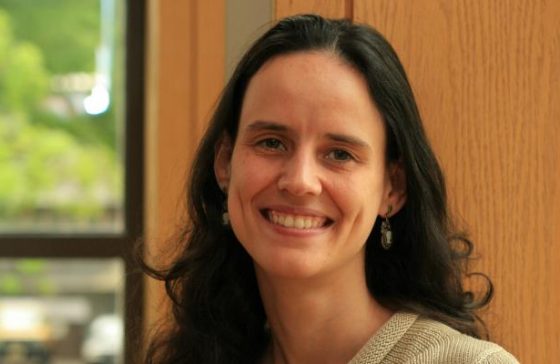
Poverty is one of the most examined phenomena in economics; nevertheless, its causal relationship with health outcomes remains empirically challenging to disentangle. In a recent podcast episode featured on VoxDev, UCLA Professor of Economics and CCPR Faculty Fellow Adriana Lleras-Muney discusses the intricate dynamics linking poverty and health.
Evidence demonstrates a concave relationship: health improves rapidly as income rises from very low levels, but additional wealth buys progressively less health at the top of the distribution. Lleras-Muney emphasizes that this relationship is both bidirectional and context-dependent. Two-way causation complicates empirical research, as researchers cannot observe and infer the direction of the effect: whether poverty leads to poor health or poor health leads to poverty. She also highlights the importance of considering counterfactuals and broader contextual factors, noting that poverty is not experienced uniformly and that environmental conditions can significantly shape its health consequences.
Addressing policy solutions, Lleras-Muney reports that while effective interventions exist, there are barriers to overcome. For example, strong evidence suggests that universal or near-universal public health insurance can effectively improve population health. However, she cautions that a “nominally free system that lacks trained personnel, medicine, or accessible facilities delivers little in practice.” In lower-income countries, implementation challenges center on how to fund and deliver such systems with constrained public resources. Ultimately, a fundamental shift from acute medical treatment toward prevention is needed, prioritizing behavioral and health investments to reduce the systemic burden before acute care is required.

