
25-27 Cohort
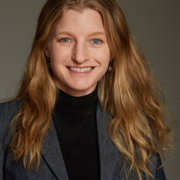
Heidi West
Department of Health Science
Heidi West is an Assistant Professor in the Department of Health Science at California State University, Long Beach. She works at the center of population mobility and health, primarily in the global context, and explores links between international frameworks and health system responses to demographic change. Her work includes projects in the US, Myanmar, Indonesia, Bangladesh, and cross-country comparisons using binational data and the DHS surveys. Dr. West’s research is bolstered by over a decade of international program experience where she used evidence-based approaches to build capacity and expand research collaboration for different institutions. She co-founded an international NGO that uses research and capacity building to help improve decision-making and build sustainable scientific practice in low and middle countries while offering mentored research experiences to students and young professionals from around the world. With a PhD from UCLA’s department of Health Policy and Management, a Master‘s in Ethics, Peace and Global Affairs from American University, and a Bachelor’s degree in Political Science from UC Berkeley, she takes an interdisciplinary and mixed methods approach to producing innovative and timely evidence to inform interventions to improve health outcomes across population groups.
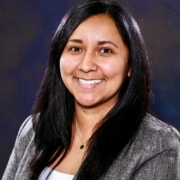
Erika Meza
Department of Public Health
Erika Meza is a social epidemiologist and Assistant Professor in the Kinesiology and Public Health Department at California Polytechnic State University, San Luis Obispo. Her work examines how social and weather determinants, such as socioeconomic status, educational mobility, and sources of pollution, shape health differences and cognitive aging among older adults and other vulnerable populations. She completed her PhD in Epidemiology at the University of California, San Francisco, her MPH in Environmental Health Sciences at Columbia University, and a BS in Applied Mathematics from Loyola Marymount University.

Nicole Henley
Health Science and Human Ecology Department
Dr. Nicole Henley is a Professor and Interim Department Chair of the Health Science and Human Ecology Department at California State University, San Bernardino. She also serves as the Coordinator for the Health Services Administration Undergraduate (BSHSA) and Graduate (MSHSA) Programs. She holds a Ph.D. in Health Services from UCLA and an MBA from the University of Wisconsin-Whitewater. Her professional experience is in the fields of teaching, research, and culturally responsive evaluation. Dr. Henley is committed to the “Each One, Teach One” philosophy, which is rooted in student-centered pedagogy, and assists students in becoming independent thinkers, problem-solvers, and lifetime learners.
Dr. Henley’s research and culturally responsive evaluation work are centered around the social determinants of health framework and focuses on health inequities among underserved populations. She has worked with Foothill AIDS Project, San Bernardino Department of Public Health, Los Angeles County Commission for Women, United Christian Center, and the City of Berkely Health, Housing, and Community Services, and has served on the board of several academic and community-based organizations such as: Community Hospital of San Bernardino, Time for Change Foundation, Chicago School of Psychology, San Bernardino Interagency Council on Homelessness, and the National Black Student Union, to name a few. To honor her maternal grandmother, she endowed the Evelyn Bronson Scholarship in 2019 at the University of Wisconsin-Whitewater, to assist first- generation students during their academic journey. Dr. Henley describes herself as a “servant-leader”, passionate about assisting others in achieving their goals and committed to leaving a legacy for future generations.
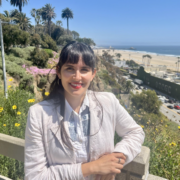
Daniela Urbina
Sociology
I am an Assistant Professor of Sociology. I study family demography, gender inequality, education, and quantitative methods. Before joining USC, I was a Postdoctoral Researcher at the Leverhulme Centre for Demographic Science at the University of Oxford. I completed a Ph.D. in Sociology and Social Policy at Princeton University. My work has been published in Demography, Journal of Marriage and Family, Population and Development Review, Sociological Methods and Research, among other outlets, and has received awards from the Development, Family, and Methodology sections of the American Sociological Association.
One strand of my work explores the demographic implications of the rise of women’s education relative to men in Latin America, particularly for union formation and within-household inequalities. A second strand focuses on the role of cultural beliefs about family and gender on assortative mating, the division of household labor, and students’ career choices. Methodologically, I combine demographic and causal inference methods to analyze these topics, including computational tools and original data collected via survey experiments.
23-25 Cohort

Prachi Jain
Department of Economics
Prachi Jain is an Associate Professor in the Department of Economics at Loyola Marymount University. Her research uses experimental methods to explore topics in behavioral economics, economics across population groups, and economic development. Her interests are expansive, for example exploring the role of social networks in informal insurance, the underrepresentation of women in labor markets, financial privacy in couples, and the effects of stress on economic decision-making. She is a Faculty Affiliate at the Center for Effective Global Action and an external affiliate with the California Center for Population Research. She received a Ph.D. in Economics from the University of Michigan. She previously was a Postdoctoral Associate at Princeton University and completed her B.A. degree in Economics at the University of California, Berkeley.
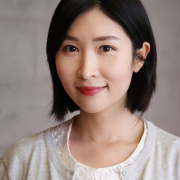
Luoman Bao
Department of Sociology
Luoman Bao is an Associate Professor of Sociology at California State University, Los Angeles. Her research focuses on aging, health, and family, with a particular attention to aging experiences and intergenerational dynamics in varying social contexts, as well as their implications for the health and well-being of older adults. Her work also examines how demographic characteristics, and socioeconomic inequalities shape family experiences and individual health across the aging process.
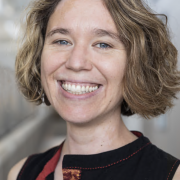
Maria-Elena De Trinidad Young
Department of Public Health
Dr. Maria-Elena De Trinidad Young is an immigrant health scholar whose research seeks to understand the impact of the US immigration system on the well-being of immigrants and their families. She has established new frameworks and measures to understand the relationships between immigration policies, citizenship/legal status, and health, and has conducted some of the first empirical studies showing that immigration policy is associated with different health outcomes. A guiding principle in her work is to partner with immigrants and community members as active contributors in the design and interpretation of research. Her research has been supported by the National Institutes of Health and published in a wide range of public health, health policy, and sociological journals, including American Journal of Public Health, The Milbank Quarterly, International Migration Review, and Social Science and Medicine. She received her PhD in community health sciences from the UCLA Fielding School of Public Health and her MPH with an emphasis in maternal and child health from UC Berkeley School of Public Health.
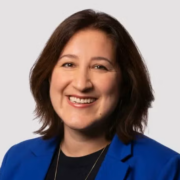
Tabashir Nobari
Department of Public Health
Tabashir Nobari, PhD, MPH, is an affiliate at the UCLA Center for Health Policy Research and an associate professor in the Department of Public Health at California State University, Fullerton. Nobari’s longstanding interest is preventing socioeconomic and racial/ethnic health inequities among young children and college students by addressing health equity barriers through social programs and policies. Her research focuses on the social determinants of health, particularly food insecurity, housing insecurity, homelessness, and adverse childhood experiences. Nobari uses both quantitative and qualitative research methods to understand the impact of policies and programs on college students’ basic needs and early childhood obesity. She focuses on preventing inequities in obesity and food insecurity among young children and college students by addressing health equity barriers (housing insecurity and poverty) through food assistance programs (CalFresh, WIC) and policies. Nobari is a co-investigator on a USDA-funded study to examine the policies, systems, and environments related to access to food at Minority-Serving Institutions. She is co-PI on an NSF-funded study to develop smart technologies for previously unhoused residents of Permanent Supportive Housing in Orange County. She is also a member of the board of directors for Nourish California, an advocacy group working to ensure that all Californians with low income can access the food they need and want. Nobari earned her doctorate in community health sciences at the UCLA Fielding School of Public Health and her master’s in public health in international epidemiology at the University of Michigan, Ann Arbor. She completed her postdoc with PHFE-WIC, the largest local agency in the nation for the Supplemental Nutrition Program for Women, Infants and Children.