
Jake Anderson (UCLA, Economics)
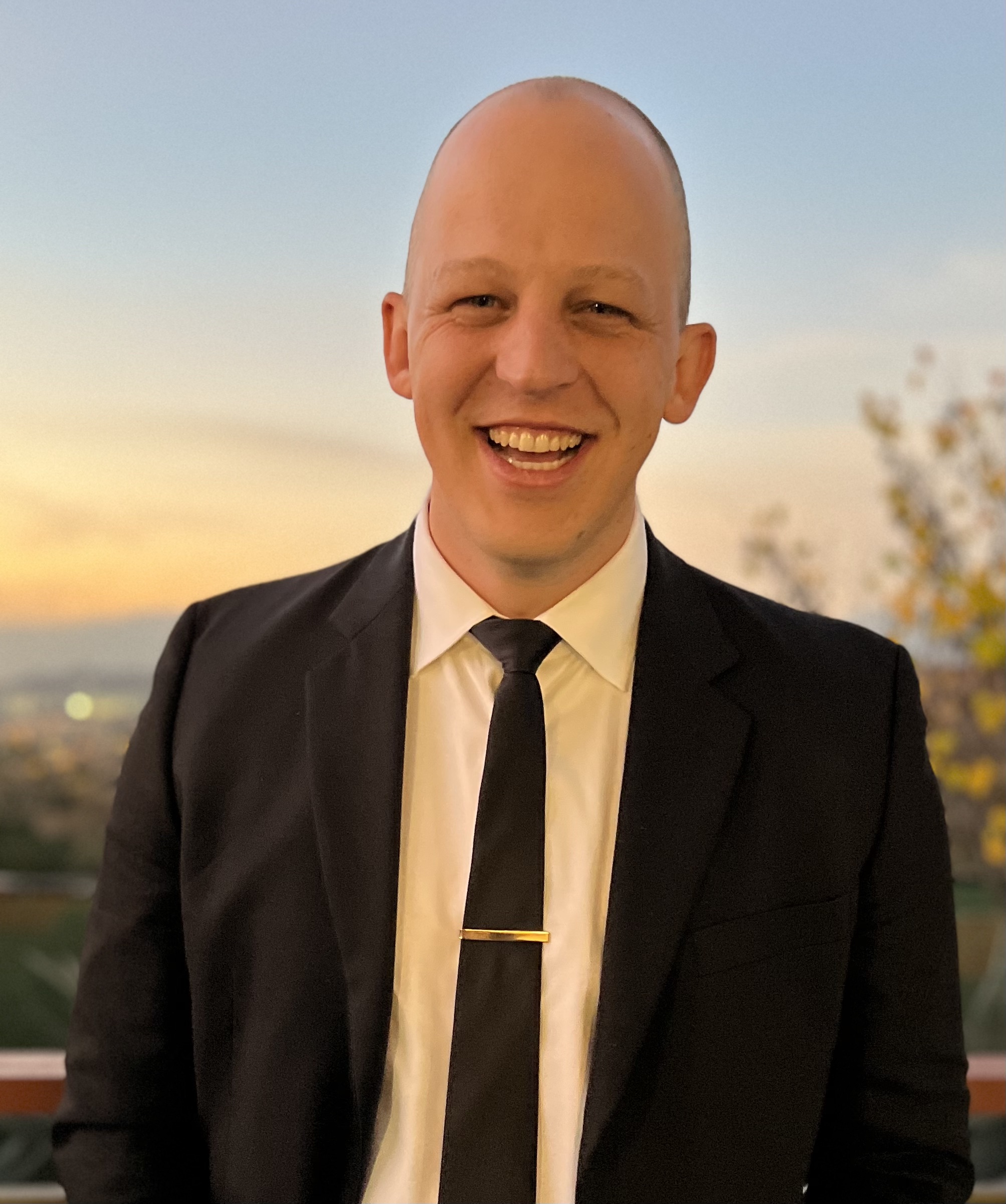 Jake Anderson is a PhD candidate in Economics at UCLA and an affiliate of the California Center for Population Research, where he held a National Institute of Child Health and Human Development (NICHD) T32 traineeship in 2024-2025. His research is in the economics of crime, with work in progress on peer effects and criminal capital transmission in jails, parole eligibility reform, and the effects of communication costs on incarcerated populations. Much of his empirical work depends on large-scale automated data collection, including scraping infrastructure built to run correspondence studies or scrape public information from government portals and websites.
Before entering the doctoral program he spent nearly a decade in industry in various roles including software engineer, manager, and director, most recently as an Applied Scientist at Uber and previously as a Data Science Manager at Moloco, a “decacorn” performance marketing startup, where he led a team of 25 data scientists. He holds an MA in Statistics from the University of California, Berkeley and a BS in Mathematics and Computer Science from the University of California, Irvine, and has applied AI-assisted workflows to large-scale research and engineering projects in both industry and academic settings.
Adversarial Agents: Managing AI Research Assistants with Claude Code
Abstract: Used carelessly, LLMs and AI agents may be adversarial: they hallucinate sources, cut corners, become “lazy,” and in the worst case fabricate results. Researchers bring deep domain knowledge and sharp questions to these tools, but an academic career rarely includes experience managing a large team. At the current stage of the technology, that management skill is precisely what allows a researcher to harness the power of frontier tools. This workshop introduces a framework for giving agents the context, purpose, and accountability they require, so that research time is spent on research rather than on debugging, formatting tables, and other tedious parts of the work.
The session covers the components of Claude Code most relevant to a research workflow, beginning with basic features such as planning mode and context management and building toward custom personas, agents, and skills. In particular, the workshop presents a model of “Adversarial Agents,” a strategy for assigning permissions and roles so that agents check one another’s work and hold each other to the instructions they were given.
The session is hands-on. Participants build and leave with a set of components configured for their own work: custom agent personas, reusable skills, and project-level instructions covering research and administrative workflows, including literature ingestion and summarization and data cleaning and replication auditing. Participants should bring a laptop.