
Latest Past Events

Devesh Kapur, University of Pennsylvania

CCPR Seminar Room 4240 Public Affairs Building, Los Angeles

"The Other One Percent: Indians in America "

ABSTRACT

People of Indian origin—whether they are Indian-born or American-born—make up about 1% of the U.S. population. While there are several anecdotal accounts of Indians in America as well as scholarly studies on specific sub-groups, The Other One Percent is the first data-driven comprehensive account of the community. The book focuses on three major issues: Selection—the processes by which people from a low-income country have become the highest-income and most-educated group in the U.S; Assimilation—the multiple pathways and challenges of integration while maintaining some aspects of their distinctive identities; and Entrepreneurship—from motels to medicine and finance to technology. Drawing from different academic disciplines, the book examines the entire community, from its successful to its marginal members. The Other One Percent is a follow-up to Kapur’s prior book, Diaspora, Democracy and Development: The Impact of International Migration From India on India, for which he earned a 2012 ENMISA Distinguished Book Award of the International Studies Association.
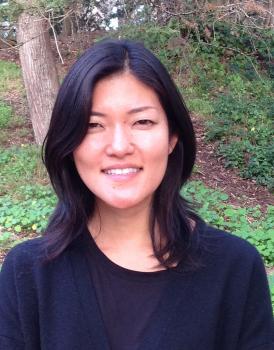
Naomi Sugie, University of California, Irvine

CCPR Seminar Room 4240 Public Affairs Building, Los Angeles

"Utilizing Smartphones to Study Disadvantaged and Hard-to-Reach Groups: The Newark Smartphone Reentry Project"

ABSTRACT

In this talk, I discuss the use of smartphones to collect real-time information on the experiences of men recently released from prison and on parole in Newark, New Jersey. Mobile technologies, specifically smartphones, offer social scientists a potentially powerful approach to examine the social world. They enable researchers to collect information that was previously unobservable or difficult to measure, expanding the realm of empirical investigation. For research that concerns resource-poor and hard-to-reach groups, such as men recently released from prison, smartphones may be particularly advantageous by lessening sample selection and attrition and by improving measurement quality of irregular and unstable experiences. The first part of this talk describes the project and the smartphone application. I then present findings from one working paper, which uses GPS estimates to assess neighborhood-level daytime exposure by men on parole and the association between exposure and crime rates.

Ilan Meyer, University of California, Los Angeles

CCPR Seminar Room 4240 Public Affairs Building, Los Angeles

"Minority Stress and the Health of Sexual and Gender Minorities: Challenges and Innovations in Population Studies"

ABSTRACT

In several highly cited papers, Dr. Meyer has developed a model of minority stress that describes the role of prejudice and stigma in promoting social stressors that bring about adverse health outcomes for LGBT people. The model has guided his and other investigators’ population research on LGBT health disparities by identifying the mechanisms by which social stressors impact health and describing the harm to LGBT people from prejudice and stigma. In this talk, Dr. Meyer will describe minority stress research findings and current challenges to the study of LGBT health. He will describe two new NIH-funded research projects that take advantage of methodological innovations. In these projects, Dr. Meyer and co-investigators assess the role of historical context and the social environment in understanding how social changes impact the study of minority stress to help understand health and well-being of LGBT people.

UCLA CCPR