
“How Not to Destroy the World with AI” Prof. Stuart Russell
*Event has been canceled Stuart Russell, UC Berkeley March 11, 2020 11am – 1pm UCLA Ackerman Grand Ballroom Stuart Russell received his B.A. in physics from Oxford University in 1982 […]
*Event has been canceled Stuart Russell, UC Berkeley March 11, 2020 11am – 1pm UCLA Ackerman Grand Ballroom Stuart Russell received his B.A. in physics from Oxford University in 1982 […]
PAA Practice Presentation
Please join us to hear our residents interesting research and give feedback for their PAA presentations
Presenters:
Michelle Nakphong Kao: "Contemporary Trends in Marriage Formation and Dissolution in Cambodia"
Jacob Thomas: "From “Illegal” to “Undocumented”—The Impact of a Lexical Shift In a Political Campaign Against Dehumanization"
Heidi West: "Are wives of migrants in rural Bangladesh really “Left Behind”? A nuanced analysis of how spousal migration affects women’s healthcare utilization and mental, social, and general health"

Improving Emergency first Response and Follow-up for Individuals Who Experience Behavioral Crisis
Abstract: Men and women who experience serious mental illness and other challenges face increased risk of violent encounters with police officers and other first-responders. This talk describes person-, place-, and event-based strategies to improve emergency response to such incidents. It also discusses promising strategies of prevention and follow-up to reduce the risk of such violent encounters from occurring or re-occurring.
Co-sponsored with the California Policy Lab
Location: Presented remotely via Zoom

Race, Racism and (Un)healthy Aging: How socially-assigned race gets in to the body
Abstract: This talk will explore the concept of race and interrogate how ontological conceptions of race impact the questions we ask, the nature of our scientific investigations, and the conclusions we draw from scientific evidence. Drawing on recent findings from the African American Women’s Heart & Health Study, the talk will demonstrate the use of mixed methods research and intersectional framing to examine how racism gets into the body to impact racial health disparities, resulting in premature biological aging; and conclude with a discussion of implications for how we approach population health.
*Co-sponsored with the Center for the Study of Racism, Social Justice and Health
Location: Presented remotely via Zoom
Aging Among the Homeless in the time of COVID: A crisis upon a crisis
Abstract: In this talk, Margot Kushel will explore the aging of the homeless population, including causes, consequences and solutions. She will end the conversation with implications for the COVID-19 crisis.
Co-sponsored with the California Policy Lab
Location: Presented remotely via Zoom
The Voucher Promise examines the Housing Choice Voucher Program, colloquially known as “Section 8,” and how it shapes the lives of families living in a Baltimore neighborhood called Park Heights. […]
Please come join us to learn all about the California Center for Population Research! This will be the kick-off event for the start of the upcoming 2020-2021 CCPR Seminar Series. […]
The Population Centers of the University of California - newly dubbed UCPop - is pleased to announce its inaugural (remote) meeting, "Race and Inequality: A Collaborative UCPop Event." Hosted by: UC Berkeley, UC […]
"The political context and infant health in the United States"
Florencia Torche, Stanford University
Abstract: Political factors could have substantial consequences for the health and wellbeing of populations. In the United States, an important political factor is the party of the president. The two main parties differ in their ideologies and policy agendas, and these differences have sharpened since the 1960s. We examine the effect of prenatal exposure to the political party in office at the national level (president’s party) and the state level (governor’s party) on infant health between 1971 and 2018, considering the heterogeneity and timing of these effects. Fixed effects models show a beneficial effect of a Democratic president but no effect of a Democratic governor on birth outcomes. The benefit of in-utero exposure to a Democratic president is much stronger for Black infants than White infants. The effect of the president’s party does not materialize immediately after the inauguration. Rather, it takes approximately two years to fully emerge, and it remains elevated until the end of the party’s tenure in office. The effect is robust across specifications and only partially mediated by a battery of measurable social policies. Our findings suggest that the party in power is an important determinant of infant health, particularly among vulnerable populations.
"Challenges with Using Simulation Models to Plan and Refine COVID Testing for High-risk Populations"
Sanjay Basu, Harvard University
Abstract: Simulations models are frequently used during infectious disease outbreaks to guide policy and practice. This talk will discuss the use and refinement of COVID simulation models to help develop a testing network, define testing plans and refine them for high-risk populations--including homeless shelters, nursing homes, meat-packing plants, and similar congregate worksites--and address limitations and uncertainties presented by those models that were informed by implementation of their results.
Bio: Sanjay Basu, MD, PhD, is a primary care physician at Tenderloin Health Services—an integrated primary care, behavioral health, and substance use treatment clinic in San Francisco—and Director of Research at Collective Health.

"How Deep is the COVID-19 Recession? Evidence from Kenya and Beyond"
Edward Miguel, UC Berkeley
Abstract: Despite numerous journalistic accounts, systematic quantitative evidence on the evolution of economic conditions during the ongoing COVID-19 global pandemic remains scarce for most low and middle income countries, in part due to the limitations of official economic statistics in environments with large informal sectors and subsistence agriculture. I will focus on novel evidence from a detailed and large-scale panel data collection effort in rural Kenya, documenting the evolution of living standards over time as well as the effects of an earlier cash transfer program. I also discuss results from over 30,000 respondents in an ensemble of 16 original household survey samples collected in nine countries in Africa, Asia, and Latin America. The data documents declines in employment and income across socioeconomic strata beginning in March 2020, resulting in widespread food insecurity and the risk of persistent adverse effects, especially among children and other vulnerable groups.
Bio: Prof. Miguel's research focus is African economic development, including work on the economic causes and consequences of violence; the impact of ethnic divisions on local collective action; interactions between health, education, environment, and productivity for the poor; and methods for transparent social science research.
Giovanni Peri, UC Davis
Bio: Giovanni Peri has expertise in labor economics, urban economics and the economics of international migrations. In addition to his appointment in the Department of Economics, he is a Research Associate at the National Bureau of Economic Research in Cambridge, Massachusetts, and the founding director of the UC Davis Migration Research Cluster.
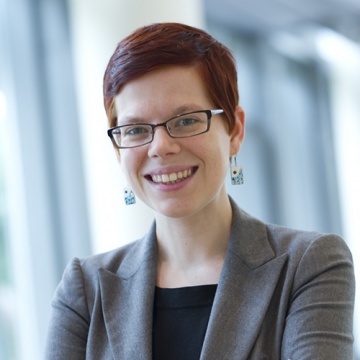
Voting after Shelby: Did pre-clearance matter?
Ariel White, Massachusetts Institute of Technology
Abstract: Nearly five decades after the passage of the Voting Rights Act, the law was dramatically changed by the Supreme Court’s decision in Shelby County v. Holder. The court effectively removed the “preclearance” process that had required places with a history of racial discrimination to get Justice Department approval before changing their voting procedures. Dissenting justices and voting-rights advocates feared that this decision could lead to massive changes to election administration and ultimately to lower rates of voter participation in minority communities. In this paper, we evaluate the impact of this decision on election practices and on Black and Hispanic voter registration and turnout. We use a combination of administrative data on registration and voting, survey data on mobilization and local election administration, and state legislative records to examine different facets of the voting rights landscape after the Court's decision.
Bio: Prof. White research focuses on voting and voting rights, race, the criminal justice system, and bureaucratic behavior. Prof. White's work uses large datasets to measure individual-level experiences, and to shed light on people's everyday interactions with government.
"Population-Based Modeling and Measurement of COVID-19"
Christina Ramirez, Prof. of Biostatistics UCLA
Mark Handcock, Prof. of Statistics UCLA
Patrick Heuveline, Prof. of Sociology UCLA
Hiram Beltrán-Sánchez, Prof. of Community Health Sciences
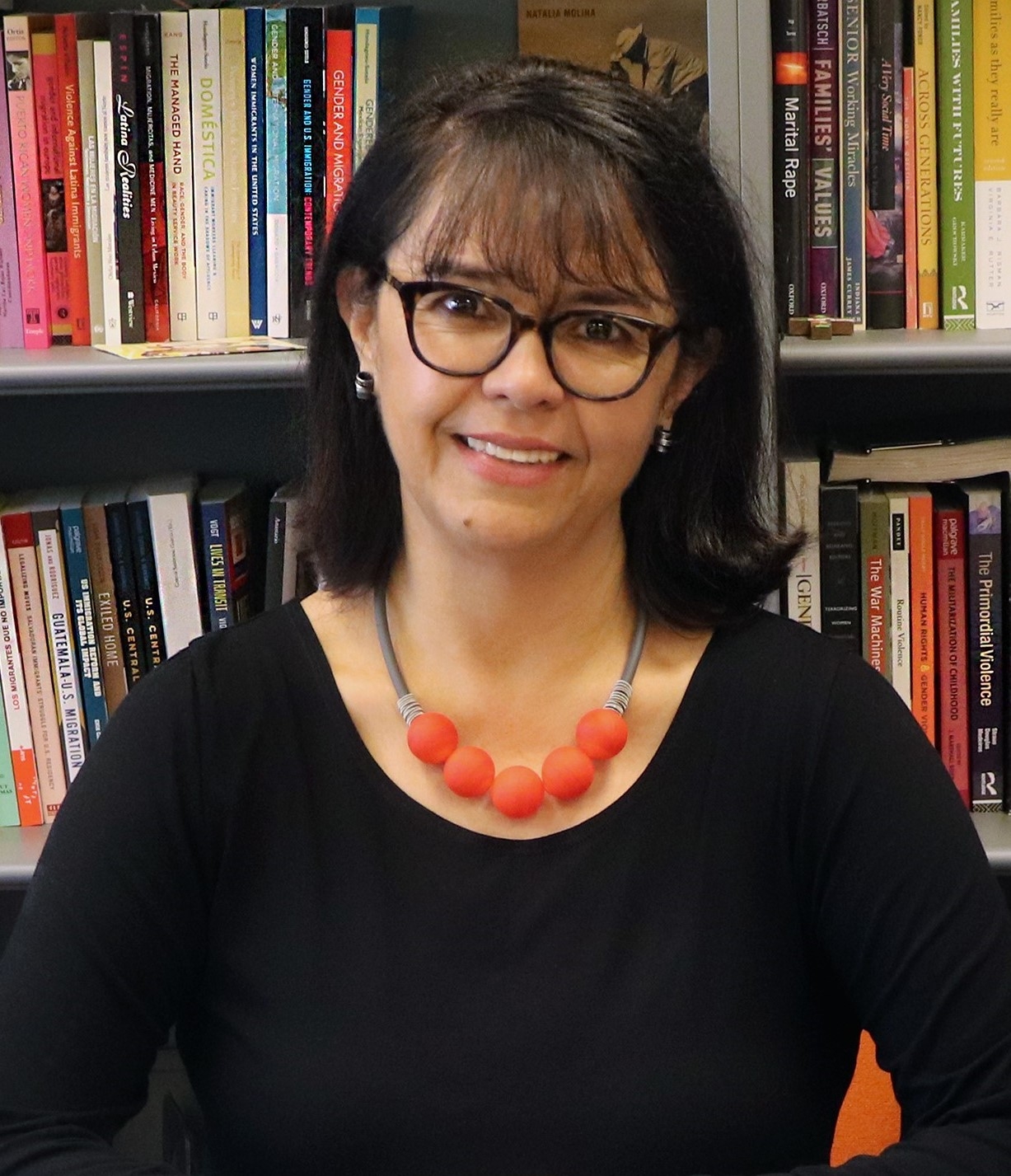
Cecilia Menjívar, UC Los Angeles
Bio: Prof. Menjívar is a Professor and Dorothy L. Meier Social Equities Chair, her research focuses on the structural roots of inequalities and on how individuals’ social locations shape their responses to such conditions.

Mario Luis Small, Harvard University
Bio: Pro. Small is the author of award-winning books and articles on networks, poverty, organizations, culture, methods, neighborhoods, institutions, and other topics. He is currently using large-scale administrative data to understand isolation in cities, studying how people use their networks to meet their needs, and exploring the epistemological foundations of qualitative research. His latest book is Someone To Talk To (Oxford). A study of how people decide whom to approach when seeking support, the book is an inquiry into human nature, a critique of network analysis, and a discourse on the role of qualitative research in the big-data era.

Jishnu Das, Georgetown University
Bio: Jishnu Das is a professor at the McCourt School of Public Policy and the Walsh School of Foreign Service at Georgetown University. Jishnu’s work focuses on health and education in low and middle-income countries, with an emphasis on social markets, or common, but complex, conflagrations of public and private education and health providers operating in a small geographical space.
Mushfiq Mobarak, Yale University
Bio: Ahmed Mushfiq Mobarak is a Professor of Economics at Yale University with concurrent appointments in the School of Management and in the Department of Economics. Mobarak is the founder and faculty director of the Yale Research Initiative on Innovation and Scale (Y-RISE). He holds other appointments at Innovations for Poverty Action, the Jameel Poverty Action Lab (J-PAL) at MIT, the International Growth Centre (IGC) at LSE.
Erica Field, Duke University
Bio: Erica Field is a Professor of Economics and Global Health at Duke University specializing in the fields of Development Economics, Health Economics and Economic Demography. She is a Faculty Research Fellow at the National Bureau of Economic Research, a research affiliate of the Bureau for Research in Economic Analysis of Development, and a member of the Jameel Poverty Action Lab at MIT.
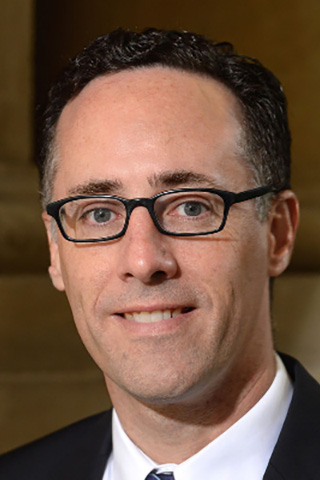
David Brady, UC Riverside
Bio: David Brady is a Professor in the School of Public Policy, and Director of the Blum Initiative on Global and Regional Poverty at the University of California, Riverside. At UCR, he teaches classes on poverty, public policy analysis, and statistics.