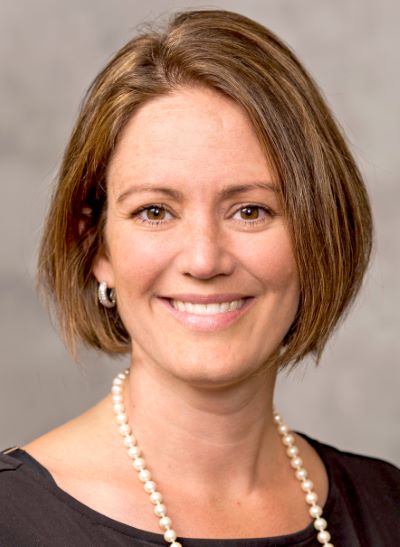

• “Voting after Shelby: Did pre-clearance matter?” Ariel White, Massachusetts Institute of Technology

    Voting after Shelby: Did pre-clearance matter?
    Ariel White, Massachusetts Institute of Technology
    Abstract: Nearly five decades after the passage of the Voting Rights Act, the law was dramatically changed by the Supreme Court’s decision in Shelby County v. Holder. The court effectively removed the “preclearance” process that had required places with a history of racial discrimination to get Justice Department approval before changing their voting procedures. Dissenting justices and voting-rights advocates feared that this decision could lead to massive changes to election administration and ultimately to lower rates of voter participation in minority communities. In this paper, we evaluate the impact of this decision on election practices and on Black and Hispanic voter registration and turnout. We use a combination of administrative data on registration and voting, survey data on mobilization and local election administration, and state legislative records to examine different facets of the voting rights landscape after the Court's decision.
    Bio: Prof. White research focuses on voting and voting rights, race, the criminal justice system, and bureaucratic behavior. Prof. White's work uses large datasets to measure individual-level experiences, and to shed light on people's everyday interactions with government.
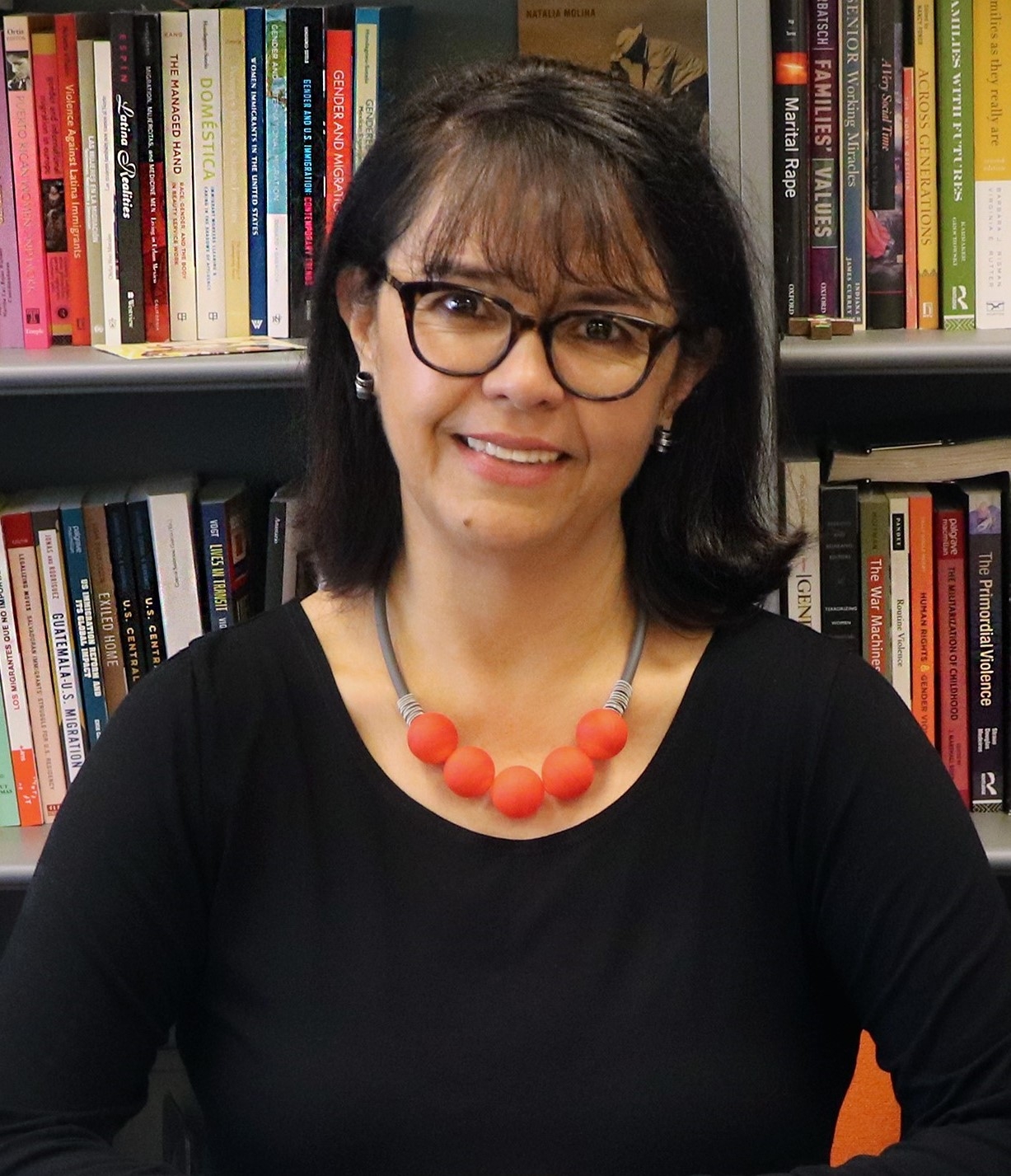

  • Population-Based Modeling and Measurement of COVID-19

    "Population-Based Modeling and Measurement of COVID-19"
    Christina Ramirez, Prof. of Biostatistics UCLA
    Mark Handcock, Prof. of Statistics UCLA
    Patrick Heuveline, Prof. of Sociology UCLA
    Hiram Beltrán-Sánchez, Prof. of Community Health Sciences

  • Job Market Workshop

    Job Market Workshop Wednesday, February 3, 2021 12:00pm to 1:00pm Corrina Moucheraud is an Assistant Professor in the Department of Health Policy and Management. She is a global health policy and […]

  • “Banks, alternative institutions, and the spatial-temporal ecology of racial inequality,” Mario Luis Small, Harvard University

    Mario Luis Small, Harvard University

    Bio: Pro. Small is the author of award-winning books and articles on networks, poverty, organizations, culture, methods, neighborhoods, institutions, and other topics. He is currently using large-scale administrative data to understand isolation in cities, studying how people use their networks to meet their needs, and exploring the epistemological foundations of qualitative research. His latest book is Someone To Talk To (Oxford). A study of how people decide whom to approach when seeking support, the book is an inquiry into human nature, a critique of network analysis, and a discourse on the role of qualitative research in the big-data era.

  • “Randomized Regulation: The Impact of Minimum Quality Standards on Health Markets,” Jishnu Das, Georgetown University

    Jishnu Das, Georgetown University

    Bio: Jishnu Das is a professor at the McCourt School of Public Policy and the Walsh School of Foreign Service at Georgetown University. Jishnu’s work focuses on health and education in low and middle-income countries, with an emphasis on social markets, or common, but complex, conflagrations of public and private education and health providers operating in a small geographical space.

  • “Migration and the Labor Market Impact of COVID-19,” Mushfiq Mobarak, Yale University

    Mushfiq Mobarak, Yale University

    Bio: Ahmed Mushfiq Mobarak is a Professor of Economics at Yale University with concurrent appointments in the School of Management and in the Department of Economics. Mobarak is the founder and faculty director of the Yale Research Initiative on Innovation and Scale (Y-RISE). He holds other appointments at Innovations for Poverty Action, the Jameel Poverty Action Lab (J-PAL) at MIT, the International Growth Centre (IGC) at LSE.

  • “A Signal to End Child Marriage: Theory and Experimental Evidence from Bangladesh,” Erica Field, Duke University

    Erica Field, Duke University

    Bio: Erica Field is a Professor of Economics and Global Health at Duke University specializing in the fields of Development Economics, Health Economics and Economic Demography. She is a Faculty Research Fellow at the National Bureau of Economic Research, a research affiliate of the Bureau for Research in Economic Analysis of Development, and a member of the Jameel Poverty Action Lab at MIT.

  • Steven Ruggles, University of Minnesota

    Virtual

    Decomposing Race Differentials in First Marriage Rates: United States, 1960-2019 I assess Wilson’s (1987) argument that the race differential in the frequency of marriage results from a shortage of marriageable […]

  • Christy Erving, Vanderbilt University

    Virtual

    Intersectional Stressors and Black Women's Health in Established Adulthood Health disparities research confirms relatively poor physical health of Black women vis-à-vis other race-gender groups. Though some research has sought to […]

  • Martha J. Bailey, UCLA

    Biography: Dr. Martha J. Bailey is a Professor in the Department of Economics at the University of California Los Angeles. She is also a Research Associate at the National Bureau […]

  • UCLA CCPR